There’s not a dam for every single lock on the lower Fox River, but most of the locks are paired with a dam. Early dam construction on the river began in the 1830s to harness water power for lumber and flour mills. Before paper was king, flour and lumber were the primary goods shipped on the river.
In 1835, a group of local De Pere businessmen saw the potential for “improving” the Fox River and got approval from the Michigan legislature to build the original dam across the Fox River. The area at that time was part of the Michigan Territory; Wisconsin statehood was still 13 years off.
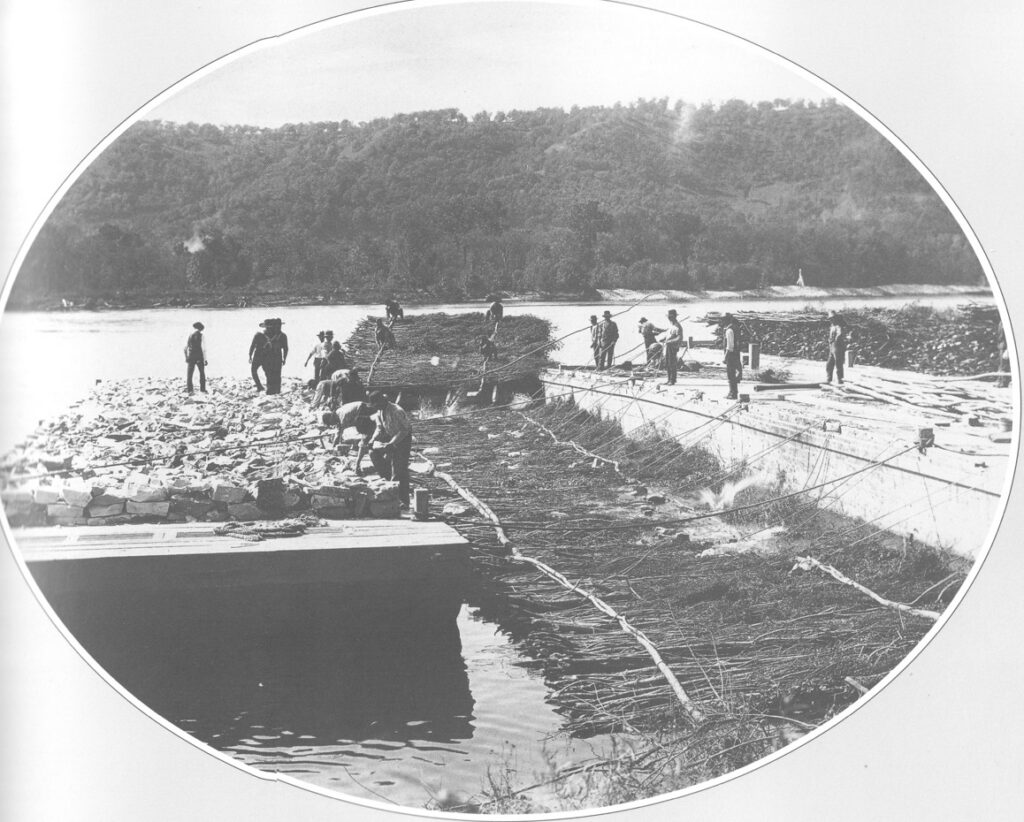
The first De Pere dam earned a reputation due to its construction style which used rocks, mud and brush. Steamboat captains referred to it as a “hazard to navigation” which isn’t a good label for a dam. In the late 1890s, Henry Bosse of the Army Corps of Engineers photographed dams and locks on the upper Mississippi. According to Bosse, the rock and brush construction worked best on muddy river bottoms (like the Mississippi) that have silty mud moving downstream which packs into the brush keeping it all in place. However, the Fox River at De Pere has a more rocky bottom, perhaps contributing to the eventual failure of the early dam.
The original dam at De Pere was replaced by a more robust version using quarried limestone with upgrades to follow eventually using concrete with steel gates. Often, builders of these Fox River dams quarried the limestone right from the riverbed near the dam.
This photo from the Bosse’s book show the rock and brush construction underway at a dam on the Mississippi in 1889. Look closely to see the bundled branches and small trees laid down first, followed by a layer of rocks.